Holiday Retail Inventory Overflow: When to Rent a Storage Container
Plan temporary retail storage for peak season. Compare container size, receiving access, inventory rotation, rental dates, and pickup.
Quick answer
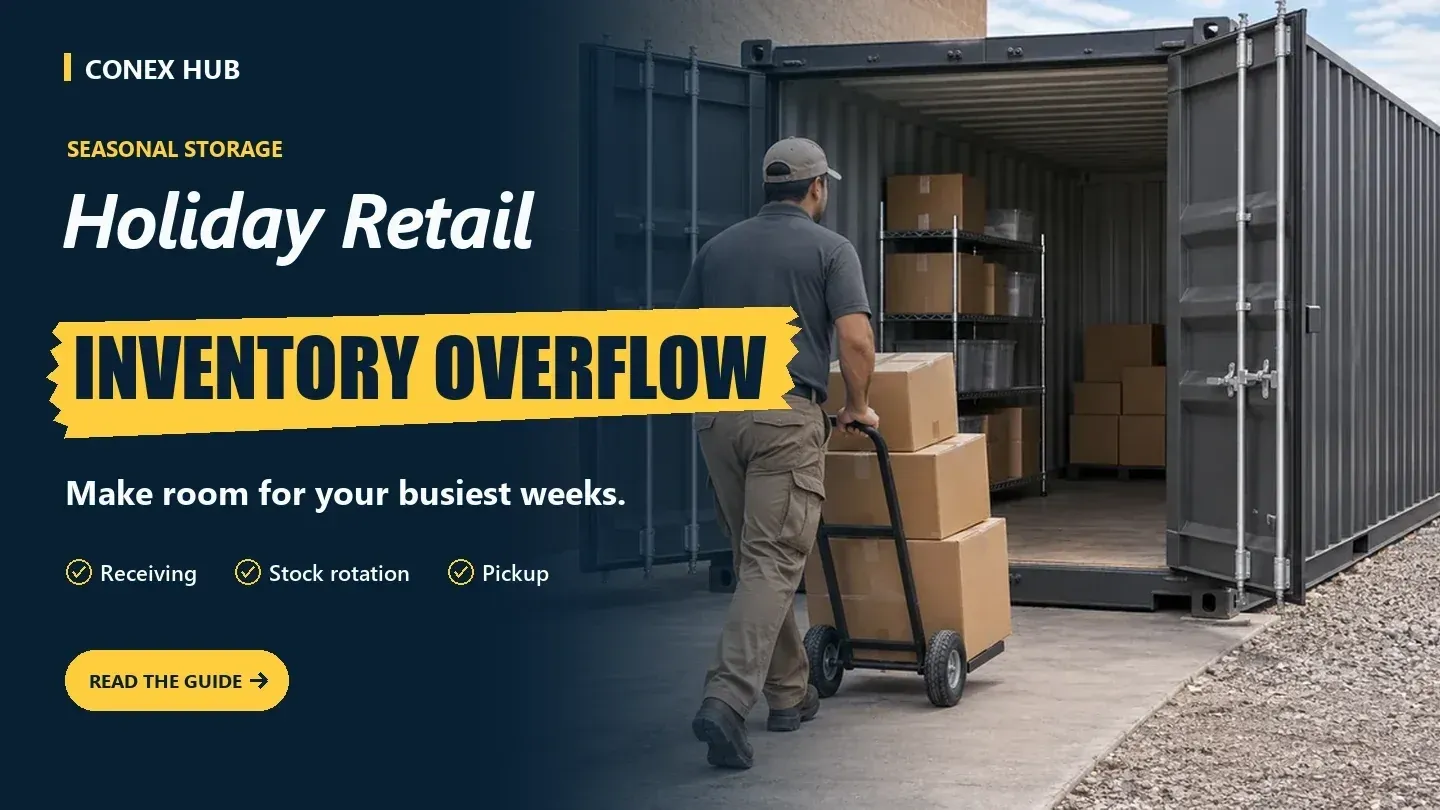
A seasonal storage container earns its keep when extra inventory is taking over the stockroom and your associates need to replenish the sales floor without leaving the property or driving to an off-site unit. Peak season turns a tidy back room into a maze of cartons, and a container parked at the building gives you a second stockroom that is steps away and under your own control. But a container only helps if it is sized and placed for the way your team actually receives and replenishes. Before you request a rental, map the busiest receiving week and decide which products genuinely need to stay inside the store.
Size for the peak week and the way you replenish
Start with the real peak, not an average. List the cartons or pallets that arrive before your busiest sales period, use their actual dimensions, and note the handling equipment your team uses — hand, cart, or pallet jack. Then leave an aisle and room to turn. The test is simple: if your team has to unload two pallets to reach the one they need, the container is packed too full for the way they work, and the time lost will cost more than a slightly larger unit.
Organize the space the way the floor sells. Keep fast-moving items near the doors, and create separate, labeled areas for backstock, returns, and fixtures so nothing gets buried. Reserve space inside the store itself for anything that needs controlled temperature or humidity, high-value or high-theft merchandise, and the items your team touches throughout the day. The container is for overflow and backstock, not for the goods you reach for hourly.
Pick a placement that supports receiving
Walk the full route from the proposed container spot to the stockroom with an empty cart before you commit to a location. Check slopes, curb transitions, lighting after dark, pedestrian traffic, and the busy delivery periods when a truck or a shopper might block the path. Coordinate the location with the property manager and any neighboring tenants so you preserve access to exits, fire lanes, loading zones, and their operations — a container in the wrong spot can create a safety or lease problem on top of a logistics one. Finally, show dispatch where the delivery truck can line up and which way the doors should face for your receiving flow.
Set the rental dates around operations
Schedule placement to land before your first overflow shipment arrives, with a little buffer — a container that shows up after the stock does solves nothing. When you estimate the end date, build in the long tail of the season: returns, leftover stock, and fixture removal all happen after the selling stops. Confirm the minimum term, the extension process, the pickup-notice requirement, and whether the billing cycle changes if the unit stays an extra week into January. And make sure the truck can still collect the unit at the end, even after parking patterns, snow piles, and seasonal displays have changed the site around it.
Assign ownership before the rush
A shared container with no owner becomes a mess fast. Before peak, name the people responsible for the key, the inventory count, and the pickup request. Label the storage zones and agree how each shift records goods moved between the container and the store, so your inventory system stays accurate when three shifts a day are pulling stock. When the weather turns, designate someone to check cartons and the container interior for moisture, because a cold snap after a warm week is exactly when condensation can appear on goods you can't afford to lose.
A sample receiving plan
On the first morning, stage empty shelving and label the bays before the truckload arrives. Receive the cartons into one clearly marked zone rather than scattering them. Then move each carton to a numbered shelf or floor position as it enters inventory, so the count stays live and nothing disappears into a pile. Keep returned goods in a separate bay from saleable stock, and leave enough room to count inventory without blocking the aisle.
Before peak week commits you, run a trial with the heaviest carton and the exact cart your associates use. If it takes two people to maneuver safely, or the route crosses customer traffic at a busy hour, revise the placement or the receiving schedule now — while changing it is just a conversation, not a crisis.
Plan for security and weather
A container at the edge of a lot is a target and is exposed to the elements, so plan for both. Use a quality lock — a puck or disc lock in a lockbox resists bolt cutters better than a standard padlock — and keep key control tight. Think about lighting and camera sightlines when you choose the placement. For weather, raise vulnerable cartons off the floor, leave a little gap from the steel walls, and keep anything moisture-sensitive inside the store. A few minutes of planning here protects a season's worth of margin.
Is a 20ft or 40ft unit better for retail overflow?
Base it on your peak inventory, the aisle space your team needs, the delivery clearance at the site, and how quickly goods move. A 20ft unit is easier to place in a shopping-center lot and keeps everything within a few steps; a 40ft gives more room for zones but needs a longer truck approach. Compare the layouts and the access before defaulting to the larger unit.
What belongs in the quote request?
Include the delivery address, the target delivery and pickup dates, the proposed placement, and whether your team will move goods by hand, cart, or pallet equipment. Photos of the lot and the approach help dispatch confirm the truck can reach your spot.
How early should I book for the holidays?
Earlier than feels necessary. Seasonal demand for storage containers peaks right when you need one, so confirm the unit and the delivery date well ahead of your first overflow shipment. Booking early also locks your placement and dates before the lot fills with seasonal displays and deliveries.
Get a quote from Conex Hub
Share your project details, delivery ZIP code, and target date when you request a quote. For more information, see rental terms and options.