Reefer Container vs. Walk-In Cooler for Temporary Cold Storage
Compare refrigerated containers and walk-in coolers by site access, power, loading, airflow, monitoring, and project duration.
Quick answer
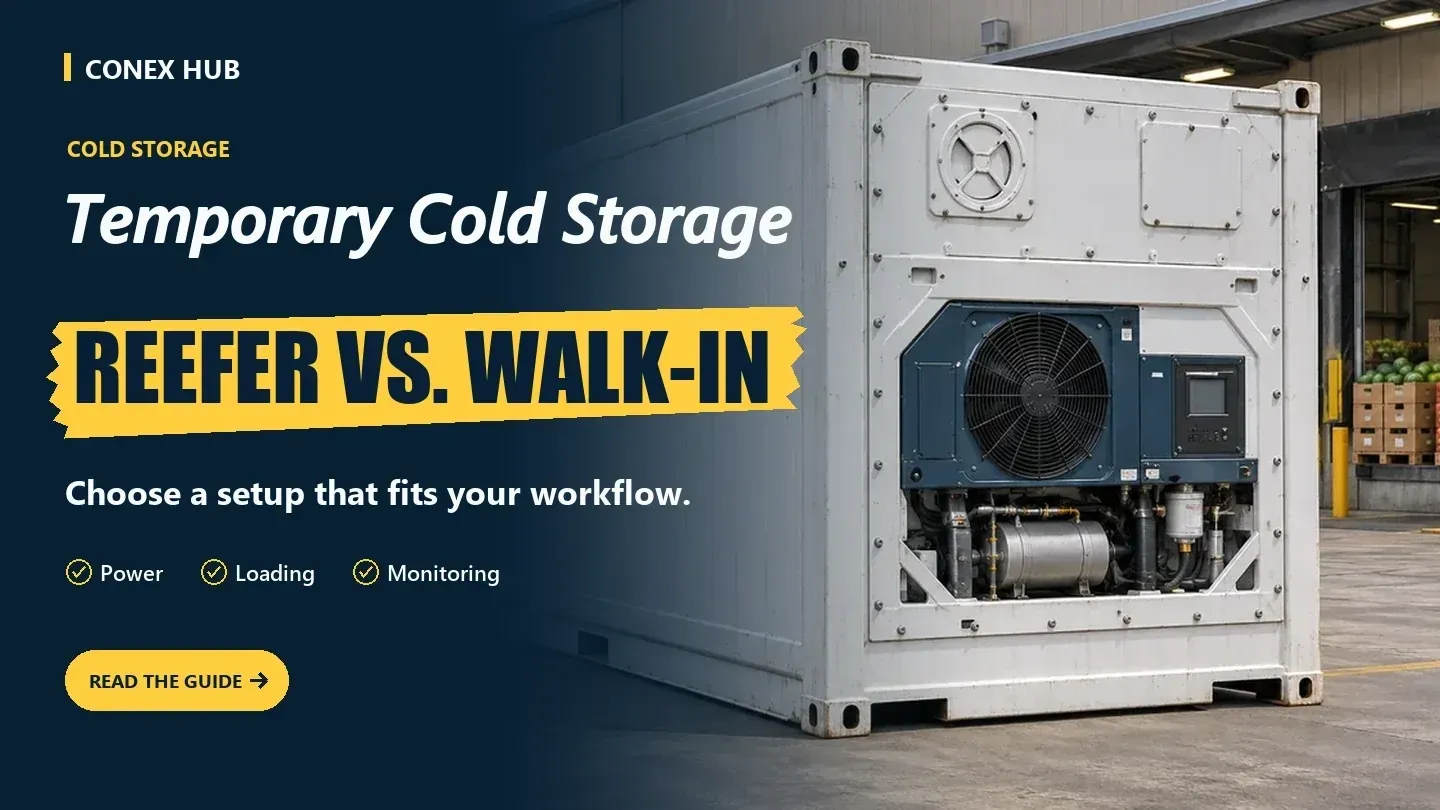
A refrigerated shipping container — a "reefer" — suits a project that needs a standalone cold unit at an accessible outdoor site, delivered and running on its own power. A walk-in cooler makes more sense when staff need frequent, fast access from inside an existing operation. Both can hold product cold; the right choice usually comes down to where the unit sits, how often the door opens, and how goods flow between receiving, storage, and dispatch. Start with the product's temperature requirement and the movement pattern, and the rest of the decision tends to follow.
Compare the workflows
Outdoor reefer container. Plan for truck delivery, ground conditions, door access, and — critically — an electrical supply that matches the exact unit, since reefers draw significant power and often need a specific voltage and plug. Confirm how pallets will cross the threshold, which sits higher off the ground than a walk-in floor, and whether you need a ramp or a dock for safe loading. Ask up front how the refrigeration machinery will be reached for service once the container is placed, because a unit boxed in against a wall is hard to maintain.
Walk-in cooler. Check the available building space, the access route for installation, where the refrigeration equipment (the condensing unit) will sit, and how the cooler fits the existing workflow. An indoor location shortens the distance staff move product and keeps them out of the weather, which matters when the door opens dozens of times an hour. Ask how installation and, later, removal affect the premises — a walk-in is more of a fixture and less of a drive-away asset than a reefer.
Specify the load before you specify the unit
Tell the supplier exactly what you will store, the operating range you need, the temperature of the goods when they arrive, and how often the doors will open. This matters more than it sounds: cooling warm product down and simply holding product that already arrives cold are two different jobs, and a unit sized for one may struggle at the other. Specify the pallet count, pallet height, and the layout you need to keep air moving around the load, because a reefer relies on airflow and a blocked unit develops warm spots. Ask the supplier to confirm, in writing, that the equipment is suitable for your operating conditions rather than assuming any cold unit will do.
Confirm electrical and monitoring requirements
Request the unit's electrical documentation and have a qualified electrician confirm compatibility and the connection arrangements before delivery day — a reefer that arrives and cannot be powered is an expensive paperweight. Then settle responsibility for temperature monitoring, alarms, service response, and moving inventory if the unit goes offline. Decide who gets the call at 2 a.m. if a temperature alarm trips. If you need recorded temperatures for compliance or for your own customers, ask exactly what monitoring comes with the unit and what your team must supply.
Compare the complete temporary setup
Price the whole setup, not just the rental or purchase line. Include freight, installation, electrical work, any handling equipment, monitoring, maintenance, and removal at the end. The totals can land very differently depending on your site and use. A seasonal produce distributor working outdoors might prioritize pallet access and staging room and happily take a reefer. A facility that needs to replenish an indoor prep area many times a shift may value walking distance and fast door recovery enough to justify the more permanent walk-in. The cheapest unit is rarely the cheapest complete setup.
Questions to resolve before the delivery date
| Question | Who should confirm it |
|---|---|
| Can the unit hold the required conditions for the product and loading pattern? | Refrigeration supplier and operations team |
| Can the site supply the required electrical service? | Qualified electrician |
| Is there a clear route for delivery, loading, and removal? | Delivery provider and site lead |
| Who responds to temperature alarms or a power loss? | Operations team and service provider |
| How and when will the refrigeration unit be serviced? | Refrigeration supplier |
Assign these responsibilities before product arrives, not after. Ask for the equipment documents, and keep the supplier's service contact available to whoever is monitoring temperatures, so a problem gets a phone number instead of a scramble.
Match the choice to the length of the project
Duration quietly shapes the decision. For a short, defined need — a festival, a renovation of your existing cold room, a few weeks of seasonal surge — a reefer you can rent, run, and send back is usually the cleaner fit. For a longer or recurring need inside a fixed building, the installation effort of a walk-in amortizes better and the daily convenience adds up. Put the expected weeks or months next to both quotes before you choose; a setup that is cheap for one month and a setup that is cheap for a year are often not the same unit.
Can I use any reefer as a freezer?
Not automatically. Confirm the exact model and its rated operating range under your specific load and site conditions. Freezing has different demands than chilling, and ambient heat, door openings, and incoming product temperature all affect what a given unit can actually hold. Let the product requirement and the unit's rated performance drive the decision, in writing.
What information helps a supplier quote accurately?
Send your product and target temperature, the condition of incoming product, your desired dates, site photos, the expected loading activity, and the available electrical information. The more of this the supplier has up front, the fewer surprises on delivery day.
What happens if the power or the unit fails?
Decide this before it happens. Agree who responds to alarms, how fast a service technician can reach the site, and where inventory goes if the unit is offline for hours. For sensitive product, a written contingency plan — including backup storage — is part of a responsible setup, not an afterthought.
Get a quote from Conex Hub
Share your project details, delivery ZIP code, and target date when you request a quote. For more information, see Conex Hub's cold storage capabilities.