Used Shipping Container Inspection Checklist: 12 Things to Check
Inspect a used shipping container before you buy. Check doors, seals, floors, rust, prior repairs, and the seller’s condition terms.
Quick answer
Inspect a used shipping container in the order you'll actually use it: identify the unit, open the doors, walk the floor, and decide whether the box can protect what you plan to store. A fresh coat of paint tells you far less than a door that closes smoothly and a floor that feels solid underfoot. A used container can be an excellent buy — most storage and many conversion projects never need a near-new one-trip unit — but "used" covers everything from a tidy, wind-and-watertight box to a tired unit with a soft floor and a leaking seam. The checklist below is how you tell them apart before you pay.
Work through it in person where you can. If you are buying remotely, use the same list to drive the photos and video you ask the seller for, and get the key points in writing before money changes hands.
The 12-point used container checklist
- Unit number. Every container has a unique identification number. Match the number on the unit to your quote and photos so you know you are inspecting — and later receiving — the exact box you agreed to. If you are buying remotely, ask in writing how the seller handles substitutions if that specific unit is no longer available.
- Condition grade. Ask for the seller's written definition of the grade and any exclusions. "Cargo-worthy," "wind and watertight," and "as-is" are different promises. A grade that is fine for yard storage may not meet a shipping or conversion requirement, so match the grade to your actual use.
- Corner posts and lower rails. These carry the structural load and take the forklift and crane contact. Look for major bends, splits, or obvious deformation, and ask the seller to explain any damage that could affect how the unit is lifted, stacked, or placed.
- Sidewalls and end wall. Inspect for holes, deep dents, and the seams where panels meet. A cosmetic dent may not matter; a dent that eats into the space where you planned to run shelving, or one that has cracked through, does. Note anything that intrudes on your usable interior width.
- Roof. The roof is where water problems start and the hardest area to see from the ground. Request safely obtained roof photos and look for punctures, standing-water dents, or questionable patching. Use the seller's inspection process for any area you cannot reach safely yourself.
- Door operation. Have the seller demonstrate both door leaves through a full open-and-close cycle. The hardware should swing and seat without a pry bar or a shoulder behind it. Doors that bind now will only get worse once the unit is placed and settles.
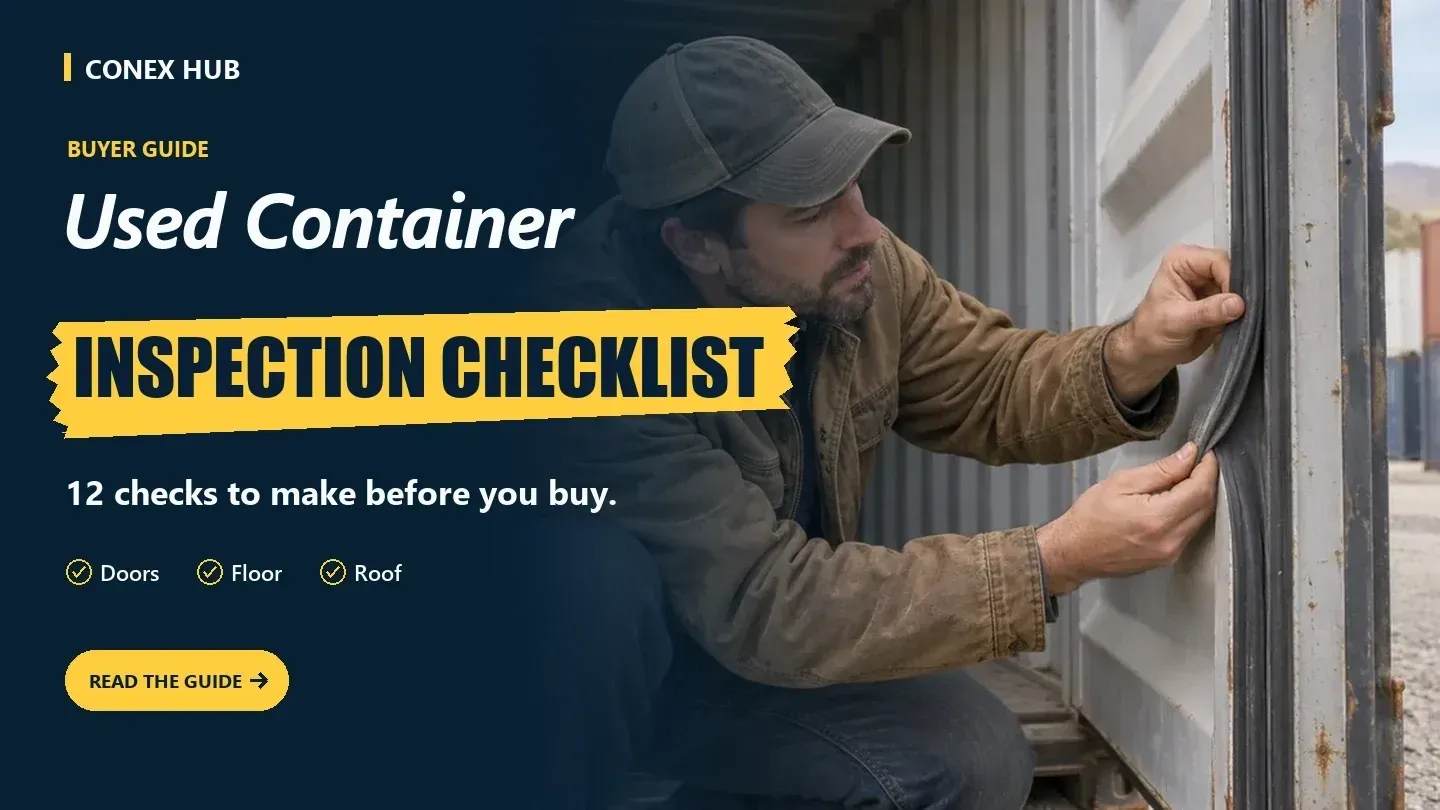
- Gaskets. Check the rubber seal around the full door perimeter and between the two door leaves. Look for tears, missing sections, hardened rubber, and daylight showing through when the doors are shut. Door seals are the single most common source of leaks and sweating.
- Locking hardware. Make sure the handles, cams, and locking bars all move and engage properly. If a lockbox is included or you plan to add one, verify that it fits the padlock or puck lock you intend to use.
- Floor. Walk the whole floor and feel for soft spots, delamination, loose or lifting panels, deep stains, and damaged thresholds. Marine plywood floors are tough but not immortal. Ask directly whether the floor is rated for the loads you plan to roll or stack on it.
- Rust and prior repairs. Separate surface oxidation, which is normal and cosmetic, from rust that has perforated a panel or eaten into a rail. Ask for close-up photos of every visible patch and find out what was repaired, when, and why. Repairs are not a red flag on their own — undisclosed ones are.
- Interior odor and residue. Step inside and use your nose. An unusual chemical odor, an oily film, or unexplained staining can point to a prior cargo you do not want near your goods. Raise it before purchase, especially if you will store food, textiles, documents, or anything that absorbs smells.
- Delivery acceptance. Agree in advance who is responsible if the delivered unit differs from the one quoted. Save the photos, the unit number, and the written description so your receiving team can verify the correct container arrived — and so you have grounds to reject the wrong one.
Buying remotely? Request one continuous video
Photos can be cropped and curated; a single unbroken video is much harder to stage. Ask the seller to start on the unit number, walk the full exterior, open both doors, and sweep the interior from the threshold to the back wall in one take. Then ask for separate close-up stills of any roof repairs, the floor corners, and the door gaskets. If the seller only has sample or stock photos, ask exactly when the actual unit will be assigned to your order and when you will get to approve it before dispatch.
Match the unit to how you'll load and use it
A walk-through is also your best chance to confirm the container fits your own workflow, not just that it is sound. Measure the door opening at its narrowest point — the clear opening is always smaller than the nominal width — and check whether the raised threshold will catch a cart or pallet jack. If you plan to bolt in racking, mount equipment, or store concentrated point loads, raise that with the seller before you treat a visual inspection as the whole story. The same box can be perfect for pallets and awkward for a wide piece of rolling equipment.
Put it in writing before you pay
Record the unit number, size, condition grade, every visible repair, and any commitment the seller made about the doors, roof, floor, or seals. Ask the seller to mark clearly which conditions are cosmetic and which they will correct before delivery, and by when. For a remote purchase, keep those photos and notes with your quote so the receiving team has something concrete to check the delivered unit against.
Is surface rust a deal-breaker?
Usually not. Location and severity are what matter. Light surface rust on a panel is cosmetic and common; rust that has perforated the steel, or that is concentrated around the lower rails, roof seams, or door frame, is a structural question. If photos show advanced corrosion in those load-bearing areas, ask for detail before committing.
Does "wind and watertight" mean the unit can ship internationally?
Not necessarily. "Wind and watertight" describes weather resistance for storage; it is not the same as a cargo-worthy or CSC certification for international shipping. If you intend to ship the container, confirm the specific freight requirement with both the seller and your transport provider before you buy.
How much should a used container's age matter?
Age is a weaker signal than condition. A well-kept ten-year-old unit can outperform a neglected younger one. Use the checklist to judge the actual floor, roof, seals, and doors rather than the year on the plate, and let condition drive the decision.
Get a quote from Conex Hub
Share your project details, delivery ZIP code, and target date when you request a quote. For more information, see used container inventory.